
Eugene Wigner and the Strange Idea That Your Mind Shapes Reality
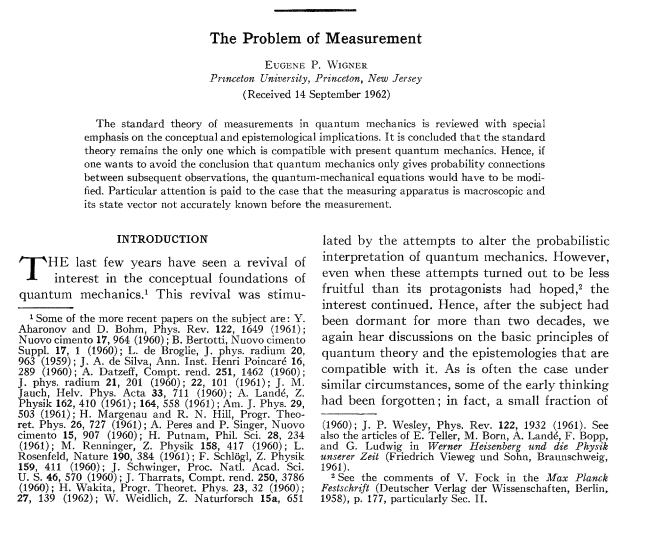
In 1962, a Nobel-winning physicist named Eugene Wigner wrote a short essay that still baffles and fascinates people to this day. The paper was called “The Problem of Measurement in Quantum Mechanics,” and in it, Wigner proposed something radical—that consciousness might be essential for reality to exist.
At a time when most physicists were avoiding questions about the observer’s role in quantum physics, Wigner walked right into it and said: “We can’t fully explain quantum mechanics without talking about consciousness.” That’s a bold claim—especially from a scientist.
But what exactly was he trying to say? And why does it matter?
The Big Question in Quantum Physics
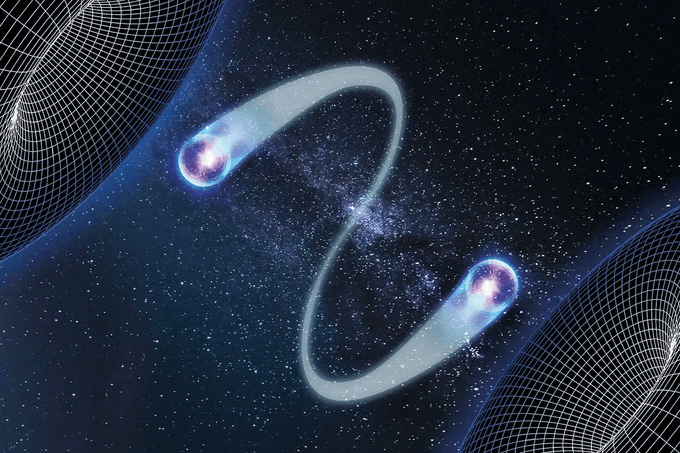
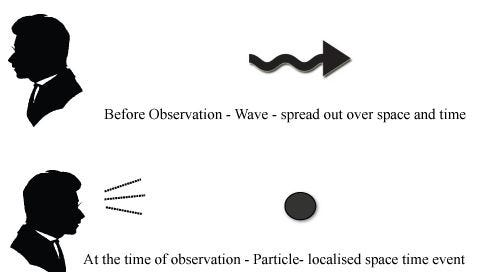
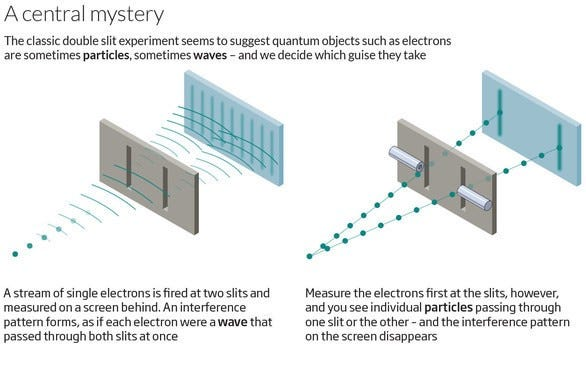
Let’s back up a bit. In quantum physics, particles like electrons don’t behave like tiny billiard balls. Instead, they exist in something called a superposition—a cloud of all possible outcomes. They only “choose” one state when someone observes or measures them.
This creates what’s known as the measurement problem: Why does observation seem to force a particle to pick a state? What counts as a measurement? And who—or what—is doing the observing?
The standard explanation at the time, known as the Copenhagen interpretation, just kind of hand-waved the problem. It said: “When you measure something, the wavefunction collapses. Don’t ask too many questions.”
But Wigner wasn’t satisfied with that.
Wigner’s Friend: A Thought Experiment That Bends Your Brain
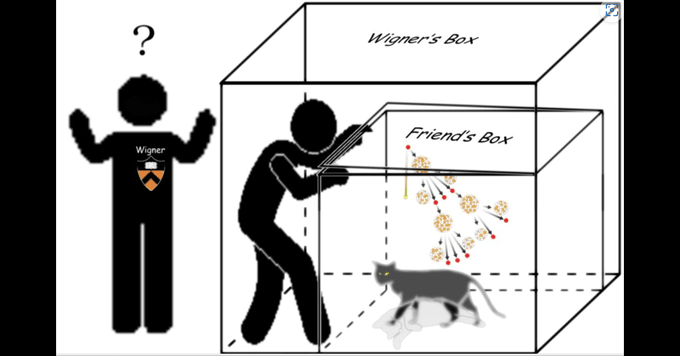
To make his point, Wigner came up with a thought experiment now famously called Wigner’s Friend.
Imagine Wigner has a friend locked inside a lab. Inside, the friend performs a quantum experiment—say, measuring the spin of an electron. Once the friend observes it, the system collapses into a definite state.
But here’s the twist: Wigner is outside the lab and hasn’t seen the result yet. From his point of view, both the electron and his friend are still in a state of superposition. In other words, Wigner thinks his friend hasn’t seen anything real yet.
So who’s right? Has the wavefunction collapsed inside the lab because the friend saw it? Or is it still in limbo because Wigner hasn’t?
This creates a weird paradox: reality seems to depend on who is looking and when they look. Wigner’s conclusion? Consciousness itself must be what causes collapse. Until someone becomes aware of the result, it doesn’t really “exist.”
Why This Was So Controversial
To many physicists, this sounded more like philosophy than science. Some called it “metaphysical nonsense.” They argued that physics should be about measurable stuff—not minds and awareness.
But Wigner wasn’t some fringe thinker. He was a respected physicist who helped lay the foundations of quantum mechanics. When he said consciousness might shape the universe, people paid attention—even if they didn’t like it.
His work opened the door to deeper questions. If consciousness affects physical reality… what even is reality?
So… Do We Create the World by Observing It?
Wigner wasn’t alone in thinking this way. Around the same time, physicist John Wheeler suggested the universe might be “participatory”—that we play an active role in bringing the universe into being by observing it.
Wigner’s essay echoed old philosophical ideas too. In Eastern philosophy, for instance, consciousness is often considered the foundation of reality, not just a byproduct of matter. Even in Western thought, philosophers like Kant said the world we see is shaped by the mind perceiving it.
In Wigner’s view, the observer doesn’t just witness reality—they help create it.
Modern Takes: Is This Still Relevant?
You’d think that by now, physics would have moved past these kinds of questions. But the truth is, Wigner’s ideas are still very much alive.
- Quantum computing still grapples with how and when measurement affects systems.
- The Many-Worlds Interpretation says the wavefunction never collapses—all outcomes happen in separate universes.
- Decoherence theory tries to explain why things seem to collapse when we measure them.
- And then there are newer takes, like QBism and relational quantum mechanics, which focus more on the role of the observer than the system itself.
Even outside of physics, Wigner’s ideas echo in popular theories like simulation theory—the idea that we might be living in a kind of hyperreal simulation that renders reality only when we look.
What This Means for You (Yes, You)
So why does all this matter?
Because if Wigner was even partly right, it suggests something mind-blowing: Your consciousness is not just floating through a pre-existing universe. It’s actively shaping it. The act of observing, of being aware, might actually bring the world into being.
That doesn’t mean you can wish things into existence. But it does mean that you—your awareness, your choices, your observations—are woven into the fabric of reality in a fundamental way.
You are not just a passenger in the universe. You’re part of the mechanism by which the universe becomes real.
Final Thoughts
Eugene Wigner’s 1962 paper was short, but it cracked open one of the deepest mysteries in all of science: what role does the mind play in the universe?
Whether you think he was a genius or off-track, Wigner’s argument still pushes us to think differently about reality, science, and ourselves. It reminds us that some of the biggest questions in life don’t have easy answers—and that maybe, just maybe, you are more powerful than you think.